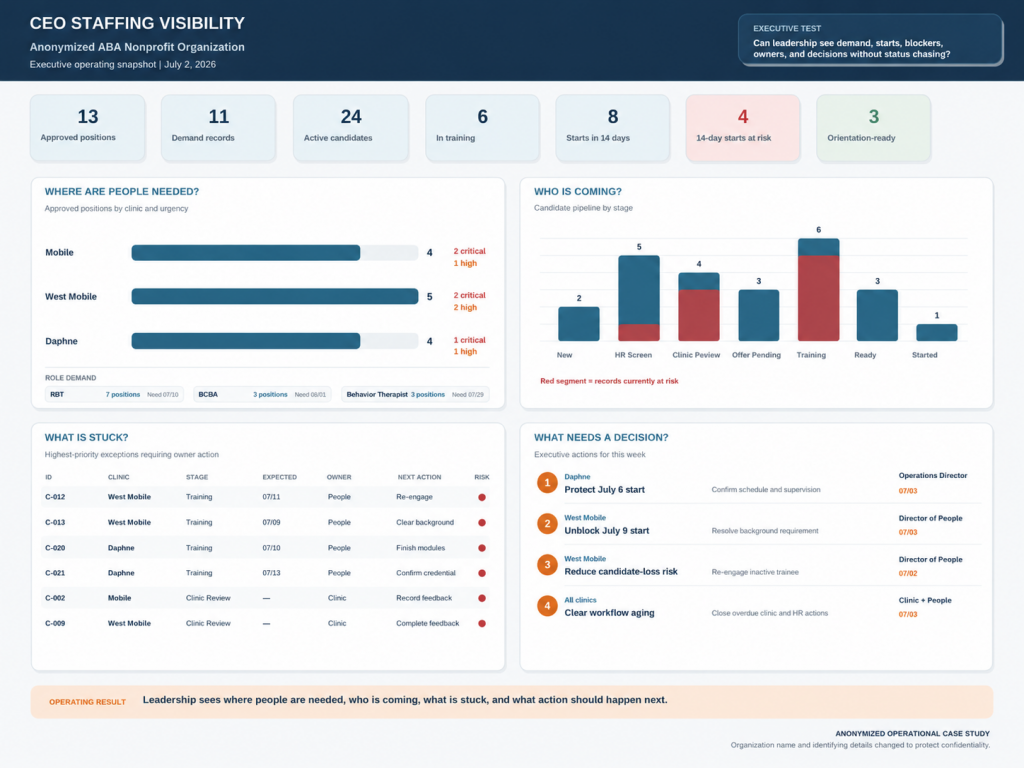
11 open roles existed on paper. Only 4 of them could actually be filled without further digging. This is a real, anonymized breakdown of what was wrong and how it was fixed, identifying details removed to protect client confidentiality.
A tracker everyone trusted less than they admitted.
A multi-location organization was tracking open staffing needs, candidate pipelines, and start dates across several sites. On paper, the tracker looked complete. In practice, leadership couldn't get a straight answer to basic questions, how many roles were really open, which candidates were actually close to starting, and where a handoff had quietly stalled. The weekly leadership meeting had become the place where that picture got reconstructed from memory, email, and spreadsheets, not where decisions got made.
Most "open role" requests started as a Slack message or a hallway conversation, not a complete record. Of 11 listed openings, only 4 had enough detail (clinic, urgency, schedule, fill date) for recruiting to actually act on.
Every candidate had a labeled pipeline stage, screened, interviewed, offer, training, but the requirements to leave each stage were never written down. Ask three people what "in review" meant and you'd get three answers.
Ownership shifted constantly, HR to clinic leadership to training, and the handoff itself was never recorded anywhere. Dropped handoffs weren't noticed until a start date slipped.
8 projected start dates existed on paper. Checking actual readiness gates, offer, training, background, orientation, showed 4 of them weren't going to happen on schedule.
The weekly leadership meeting existed to figure out what was true, not to decide what to do about it. The first 20 minutes were routinely spent rebuilding status from memory and spreadsheets before any real discussion could start.
Free 30-minute Workflow Assessment, no pitch, just a straight look at your current process.
Book a Free Workflow Assessment →